The Earth as a Classroom
July 27, 2011
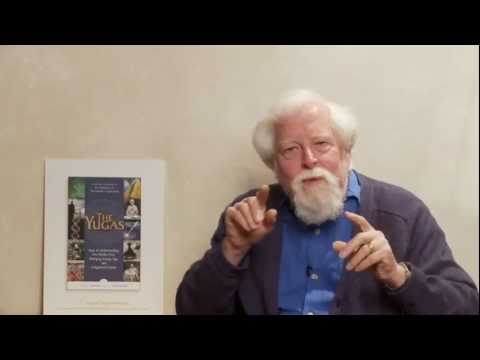
In this talk, David Steinmetz, co-author of The Yugas, delves into the ancient Indian concept of Yugas—cyclical ages that shape the spiritual and material development of humanity. Drawing on the metaphor of the Earth as a one-room classroom, he explains how different souls incarnate in each Yuga to learn unique lessons tailored to the era's challenges and opportunities.
Currently, we are in the Dwapara Yuga, an age focused on energy and power, where our task is to harness these forces wisely. Steinmetz explores how these cycles have influenced history and our collective evolution.
Transcript
David Steinmetz:
Hello. I'm David Steinmetz and I'm co-author with Joseph Selbie of a book called The Yugas. Probably you haven't heard much about the Yugas. That's because we hadn't written the book yet, but here it is.
Concept of the Yugas: Understanding Ancient Cycles of Time
What it is, is a very ancient idea, coming from India originally. In this idea, the Earth is seen as a classroom. But it's kind of like a one-room classroom, you know? You have to all have the classes. It's like a college that only has classes for freshmen for a while, and then it changes and has classes for sophomores, and another time for juniors, another time for seniors, and then it starts all over again.
The Earth as a Classroom: Learning Through the Ages
This is like, history is the story of classes for souls that come to incarnate on the Earth. Everyone is here to learn, to experience, to fulfill desires, and so we come at a time that's appropriate just for us. So the people that are incarnated at one particular time need the lessons that are available at that time and the opportunities. So each age, and they're called Yugas, Yuga means a cycle, each age has different characteristics, and it's attracted different souls to incarnate at that time.
From Kali Yuga to Dwapara Yuga: The Transition and Its Lessons
And so this book, The Yugas, is the story of these ages. And we're in an age now which we've just entered. It’s called Dwapara Yuga. That's from the Sanskrit terms. We're in an age just now that’s appropriate for people who want to deal with energy. But we've come from a time called the Kali Yuga, when people were…were not so energetic…and they didn't know exactly how to handle that.
And so we're having to learn how to deal with energy and that's our lesson for now. In a different age, there would be different lessons. And we go around a cycle. A lesson for people in the Kali Age, for people who…they need to learn to do things for themselves. They need to learn to expand, to learn, to read, to learn to, you know, it doesn't, it's not available to everybody, to make money, sort of thing. And so what's good for them is to do some things like becoming an entrepreneur.
Navigating Energy of Dwapara Yuga: Challenges and Opportunities
But then the Dwapara age which follows, which is the one we're in, is perfect for a merchant, for someone who wants to deal with a whole lot of power and energy, but with it comes the tests, “How do we deal with that energy? How do we deal with that? How do we keep from blowing up the whole Earth?” We wouldn't have that problem if we didn't have the opportunity…how should I say… we wouldn't, we wouldn't have the opportunity to learn that lesson unless we have the energy.
So, here we are in the time when it's appropriate for us to learn those things. And so we learn to bring things to ourselves. Everybody wants something for themselves. But what does a really wealthy person do? If they're successful inwardly and learn their lesson, they become a philanthropist. They give away and serve others, And that brings us to the next stage, where people just naturally serve everybody.
So each age has its own lessons. And so what we do is go through every cycle in our book, and explain the characteristics of the ages and show how they've been played out in history, and it's really a very exciting story.
