My husband and I were in charge of setting up a lecture for Swamiji in April 2002 at his alma mater, Brown University. Everything went wrong. The people we relied on didn’t keep their promises. Promotions didn’t go out on time. Even the beautiful spring weather turned suddenly cold and drizzly.
Swamiji had been hoping for a big crowd, and I was embarrassed and nervous about letting him down. At breakfast the morning of the event, I warned him about what was to come, so he wouldn’t be disappointed.
“Nishkam karma,” Swamiji said calmly, quoting in Sanskrit from the Bhagavad Gita. He was reminding me to be detached, to perform action without personal desire for the fruits of action. Do your best; then leave the results to God.
We were understaffed, and I had to work right up to the moment when Swamiji began to speak. The effort aggravated a physical condition I have, and I was in such pain I couldn’t sit up, but had to lie down on a bench in the lobby.
It didn’t help that my worst fears were realized. Only a handful of people came. “Nishkam karma,” I repeated quietly to myself. Finally, I felt well enough to sit up for the lecture.
By the time we closed down the hall and joined Swamiji for a late dinner at a nearby restaurant, I was in such pain again that I could barely move my arms. I’d had episodes like this before, and they lasted for days.
Swamiji had saved a place for me right next to him. When I sat down, within 30 seconds, all the pain was gone. Just like that.
The lecture that night was based on Hope for a Better World! The Small Communities Solution, the book that Swamiji had just published. In it, he takes on, as he puts it, the “Big Guns” of Western civilization: Plato, Machiavelli, Marx, Darwin, Freud, and others. He shows the reader not to be awed by “intellectual authority,” but to reason from one’s own experience.
 “This is a book for young people,” Swamiji said, “Idealistic, imaginative, they are the ones who will understand.”
His hope (for a better world) was to do a series of lectures on college campuses and start a youth movement toward cooperative communities. Brown University was the trial balloon.
Now, Swamiji said, “When I was meditating this afternoon, before we left for the lecture, Divine Mother told me it wasn’t going to happen in the way I had hoped. This, evidently, isn’t the right time.”
On another occasion, Swamiji said, “Many good and beautiful things that are God’s will for this world never manifest, for lack of willing human instruments to receive them.”
For this reason, Jesus wept for Jerusalem. “O Jerusalem, Jerusalem, how often would I have gathered thy children together, as a hen doth gather her brood under her wings, and ye would not!” (Matt. 24:37)
The planning for this lecture had been a comedy of errors. I remembered a time during a lawsuit against Ananda when every decision went against us, no matter how unfair. Our spirits were sagging, but Swamiji buoyed us up when he said, “The law of averages dictates that at least a few things will go in your favor. When everything goes against you, you know it is Divine Mother making it happen that way. I simply accept Her will, whatever it is.”
Nishkam karma. Do your best, then leave the results to God.
~Elizabeth Palmer
__________________________________________
Now Available from Crystal Clarity Publishers
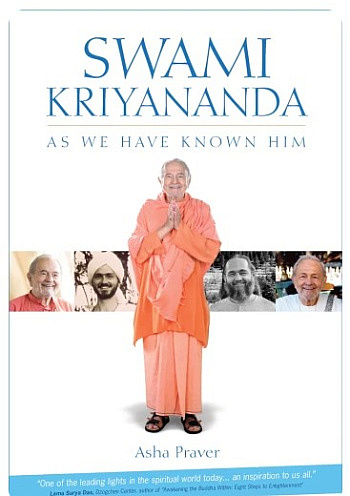
Swami Kriyananda As We Have Known Him