During our talks and satsangs, we are often asked, “How do I know what to do? How can I make the right decision?”
There is a good joke about this: A young man comes to the sage of the neighborhood and asks, “How is it that you always have such good judgment?”
The sage replies, “Well, son, good judgment comes from experience.”
“How do you get experience?” the young man asks.
“From bad judgment!”
We’ve all faced the complications caused by making a bad decision. After many years of doing relationship counseling, Devi and I jokingly said that we should have T-shirts made—the front saying, Why did you do such a thing? What were you thinking? On the back it would say, It seemed like a good idea at the time.
There must be a better way to make decisions than to blunder our way through life. Various traditions give general guidelines for right behavior: Patanjali’s yamas and niyamas, the Bible’s Ten Commandments, Buddhism’s five precepts, and Islam’s five pillars. But these universal teachings only take us so far. We often feel the need for more immediate advice, for more personal guidance.
Here is the method Paramhansa Yogananda recommends for developing wisdom-guided intuition: When you have the urge to do something that might be unwise, stop for a moment and mentally list the reasons you shouldn’t do it. If you do this, he says, you will gradually develop your intuition, and then you will be guided by your inborn wisdom.
This seems almost too easy. But it works! Give it a try. Lately I’ve been using this method to help me drop the habit of snacking between meals. Each time the urge arises, I list the reasons I should use self-control. You will find that the more you do it, the more powerful it becomes.
You can also use this method to help you make bigger decisions. When our strong-willed son was an adolescent, he became quite rebellious, and several people suggested that we send him away to boarding school. We mentally listed the reasons this might be a good idea and, just as importantly, the reasons why it might be unwise. We finally decided it would be better to have him stay with us so we could help guide him through these turbulent years. It turned out to be the bedrock of what has become a strong and loving relationship.
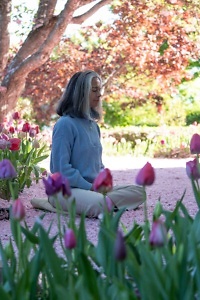 This method will help you develop wisdom-guided intuition, but there is a higher level—soul-guided intuition. For this, we must advance spiritually, especially developing the ability to concentrate deeply at the spiritual eye. By concentrating there, and by lovingly attuning our individual will to the will of God and Guru, we allow their light to illuminate our path forward. Our teachings also show how to develop this power of concentration.
First, we should use techniques of pranayama—Hong-Sau and Kriya—to withdraw the energy into the deep spine, allowing us to calm the restless thoughts. Next, we should look into the light we see in the forehead. Then, without allowing the mental processes to become activated, “float” the issue into the light. You don’t need to be too specific; the light has its own intelligence, greater even than that of our own mind. Now, see if guidance comes to you as a solution or a feeling in the heart.
Once you receive the intuition, act on it. This will help you develop confidence in your soul’s abilities. But you should also continue to be open to further inner guidance. As Swami Kriyananda humorously said, “Just because you get the guidance to go north, it doesn’t mean that you have to go all the way to the North Pole.”
Intuition, whether wisdom-born or soul-born, is an innate ability. We don’t have to pray that it come to us; we need only improve what is already there. Believe in yourself. A positive mindset allows the energy to flow unimpeded.
As Swamiji says in his affirmation for discrimination, “Resolutely I quell my inclinations, that my mind be open to the wisdom-guidance of my soul.”
With the light of God,
Nayaswami Jyotish
Listen to Jyotish as he first reads the blog, then expands on its meaning and messages for readers with behind-the-blog commentary. Subscribe to the podcast or download the audio recording by right-clicking here. Or listen to it here (9:11):
21 Comments
Another gem, and what relatable practices we can each do in our day-to-day application of this spiritual path.
Jai Guru
Wonderful explanation of wisdom and soul guided intuition. How do we recognise that it is guided by one of the above or just a thought process without any intuition.
Thanks
Thank you, Jyotish. I’m grateful for the reminder to take regular light baths as you shared in the comments. 🙏🙏🙏
🙏thanks Jyotish, very inspiring 🙏
Thank you Jyotish. I will do this for both big and small guidance.
“Float” the issue into the light…….
Thanks, Jyotish ji!
“Believe in yourself. A positive mindset allows the energy to flow unimpeded.”
Simply beautiful 😊 Thank you, Jyotishji
Now I better understand how these Touches of Light can be lifelines for some people—I’m currently in a relatively trying circumstance without a ‘spiritual bodyguard’ and this blog is a welcome breath of fresh air! Thank you all the more for these letters of Light. Hope all is going well with you both in sharing the Light throughout Italy and Europe 🙏💕
Thank you for the excellent reminders!
Thank you for your wonderful letters. A boost of inspiration and advice.
Excellent guidance. Thanks.
What else is there to say. When you stay in the Light, everything is ALL RIGHT! Namaste
Dear Nayaswami Jyotish Ji,
Thank you for sharing the blog!
Being positive to attune to the flow of intuition is a great advice. Doing it in small things and gradually increasing it to bigger items is very useful. Thank you for the guidance.
Loved the t-shirt quote :-)
Joy,
Prem
If I reflect on what might seem in retrospect to be the craziest things I’ve ever done, I don’t remember ever thinking any of them “seemed like a good idea at the time,” nor were they “bad decisions.” They were simply either what I had to do, or what I had made up my mind to do. As for “blunders,” you cannot spend your life trying to avoid them, nor would I put that onus of that label on them. They are the inevitable result of having lived life to its fullest.
I love your blog. I look forward to it! I own Whispers From Eternity and I read from it daily. I notice that you spell Paramhansa in your blog but on the cover of Whispers it is spelled Paramahansa. Which is correct?
Paramhansa Yogananda spelled his name (in the English alphabet) without a middle “a.” After his death, SRF added an extra “a”. Ananda has chosen to retain Master’s spelling
. If you can find an old photo or poster you can see the original spelling.
I.have.your.activites.and.wisdemand.difine.of.god.very.real.i.want.for.kirya.dikha
Thank you! This was helpful!
Namaste 🙏🏻😇
Thank you from my heart and mind!!! ✨✨✨🙏✨✨✨💙
Grazie Jyotish per le tue ispiranti parole