Accepting oneself is a foundation for spiritual progress. We can begin by accepting our higher Self as our true Self, and learning to live from that higher Self. Even if you have made a serious mistake, it cannot be permanent. If you love God enough, He will save you from the depths of any darkness. As Paramhansa Yogananda used to say:
If you love God enough, He doesn’t mind your faults. He only minds that you love
Him enough.
Swami Kriyananda offers valuable guidance:
We must accept the highest rather than the lowest, and this is important all the way down the line. A lot of people in the West got a hold of the wrong end of the stick of the teaching of Jesus that ‘we are sinners.’ We are sinners in the sense that we have sinned. We are not sinners in the sense that it was we who really have sinned. This is to say that the personality can sin, that the body can make a mistake, but that one unchanging reality within, which is what a person really is, cannot change. And in that sense, Yogananda used to say that the greatest sin is to call yourself a sinner.
Accept yourself as a child of God and acknowledge your divine potential, while also honestly acknowledging that you have done wrong and made mistakes. We can never rise out of delusion if we refuse to admit its reality. Your body and personality are the tools you have been given to work with. Accept yourself as you are, and use those tools to the best of your ability.
The Role of Love in Self-Acceptance
Where there is love, much is forgiven; where there is little love, little is forgiven.
Swami Kriyananda writes:
What is this self that we want to accept? We want to live above all in the thought of our perfection. In other words, never think that God’s grace is never with you, and never think that God doesn’t love you.
 God wants our total love, and He will not draw near to us if we have no real interest in Him. Unfortunately, people tend to perceive God as merely a magnified human being—capable of anger, vindictiveness, and jealousy. But if we look at the lives of the saints, we see that their attunement with God gave them the ability to transcend all such human qualities.
What we need to do in accepting ourselves is to understand, first of all, that we are not striving toward something distant. We are recognizing that which is already there. All of us have two sides to our nature: the divine side and the worldly side, the ego. The ego is that which pulls us downward, and there is an ongoing battle between these two sides within each of us.
On one hand, there is the desire to be good and to do good, to love and to be aware of a larger reality. But there is also that other voice that asks: “What is in it for me?” The ego is always trying to pull the mind down toward smallness and pettiness.
The battle of attunement is the effort to free yourself from this lower nature. We attune ourselves to the higher—not in a clinging or fearful way—and accept that this higher nature is who we truly are.
The Meaning of Self-Acceptance
- To accept means to be positive.
- To accept means to say yes to life.
- To accept means to say I can.
We grow by exerting our willpower and the perseverance to continue until we accomplish what we set out to do. We gain not only on the material level but also on the spiritual level when we do it for God.
We must accept who we are and our nature, without resentment. Use your talents and abilities, and learn the lessons they offer, instead of pushing them away. By rejecting what we are, we direct a “no” energy inward, blocking the “yes” energy we are trying to cultivate. To accept yourself means to accept your abilities, the tools you have been given, and your nature as the instrument you have to work with.
As Swami Kriyananda clarifies:
Our personality is just a tool we have to work with — not our permanent Self. Learn to accept it and use it in the right way.
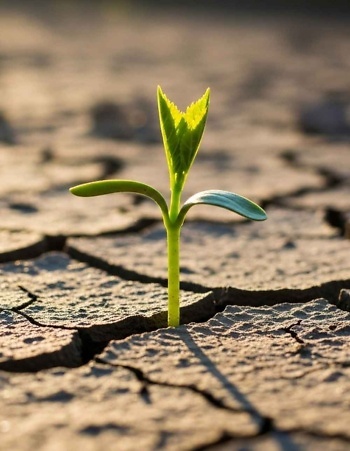 Accept your obstacles as opportunities for growth. They will sharpen your discrimination, develop your willpower, and strengthen you so that you will be able to rise to ever greater challenges.
Accepting ourselves allows us to direct all our energy in a positive direction, rather than wasting it on regret or wishing we were someone else. We have to fail a certain number of times before we succeed at anything. It takes time to build up enough energy and willpower to make that decisive leap toward growth.
If you fail and fail again but keep affirming that you have the potential to grow, then you will grow. You will finally overcome it, although you must accept what you are working on and trust your higher potential. You must come to grips with one level of reality before you can raise it to a higher one. See clearly what you have to work with, and meet reality as it truly is.
A Helpful Attitude
Swami Kriyananda helps us deal with our faults in the right way:
Whenever you find a fault in yourself, instead of feeling badly about it, congratulate yourself on having found it. Now you can get to work on it, and you won’t waste a lot of energy grieving because suddenly you have been brought face to face with the fact and had to admit that you have a flaw. Remember that you are in this world for a reason. You might not be perfect, and you are here to learn your own lessons.
Where to Start
Swami Kriyananda’s advice is to begin by incorporating the following into your life:
- Accept that you are a child of God. Accept that you carry within you all the potential of the greatest saints in history.
- Accept that the lower nature also exists, and do not try to deny or suppress it. Face it and deal with it as it truly is. Be honest in your search. Do not adopt an airy-fairy attitude toward the spiritual path — as though you were perpetually floating two feet off the ground and everything were simply beautiful. It isn’t. There is a great deal of mud to deal with here. Recognize your strengths and your weaknesses, and keep striving to do your best with what you have.
 Remember that the real lessons of life are not the things you have done, but the qualities those experiences draw out of you: humility, acceptance, patience, compassion, love, and awareness of others. These qualities matter far more than any outward accomplishment.
Remember that when you leave this world, the buildings you have built, the books you have written, the heights you have reached—none of that will matter. What you have developed as an individual, however, you will carry with you: your strengths and weaknesses, your love, your courage, your kindness, your forgiveness, your pettiness—all of it. That is your true wealth.
Whatever you do, ask yourself: What is this helping me develop in my nature? These qualities are your tools. They are not your true Self, but they are the second level, the personality. And it is ours to refine.
We invite you to watch “You Are Much More,” a video sharing the wisdom of Swami Kriyananda.

Inspired to help others on their spiritual journey? Consider enrolling in:
Ananda Spiritual Counseling® Training
6-Week Online Course

5 Comments
I love what I just read. I would like to be on your mailing list so I could read more.
Thank you!
Thanks, Ruddy! Sign up for our newsletters on this page: https://www.ananda.org/subscribe/
I would like to read more about you and what you write about.
Wonderful reminders and beautifully said! Thank you so much, Nayaswami Diksha!
Thank you.