When Westerners hear the word “yoga,” they immediately think of physical postures: “I practice yoga.” The ancient sages of yoga—Patanjali and others—would likely answer with a knowing smile. Even today, if you speak to Himalayan yogis about “yoga,” they will not think about postures, but meditation.
What is Yoga?
 Hatha Yoga, the system of postures—in truth was originally seen as preparation for the royal path of Raja Yoga, the path of meditative science. In fact, an ancient manual of Hatha Yoga, Hatha Yoga Pradipika, begins with these fundamental words:
I bow to Lord Shiva (Adinatha),
who expounded the knowledge of Hatha Yoga,
which like a staircase leads the aspirant
to the high pinnacled Raja Yoga (meditation).
Where does yoga take you?
Every day, the physical branch of yoga becomes more widely known and appreciated in the West, and rightly so. It offers enormous benefits for the body, helps to relieve stress and tension, and is wonderful for our well-being, leaving us feeling more alive and in better shape.
More and more people across all levels of society are discovering the treasures of yoga—from humble street cleaners to world famous pop stars. New yoga magazines are being launched, and yoga centers are springing up everywhere. The enthusiasm is widespread for yoga, and the praise is abundant.
As the Western world discovers and admires the shining pearl of yoga all the more, the Eastern world often shakes its head in amazement: “Have the Western brothers really understood the depth of yoga at all?”
After all, yoga has, since ancient times, held a deeply spiritual purpose: inner enlightenment and ecstasy (samadhi); realization of the true Self, of the formless soul (atman); and blissful union with God (Sat-chid-ananda).
The question is: Have the basic goals of yoga in modern times been largely forgotten in most yoga halls in the West?
Are yoga teachers today guiding their students in the spirit of the ancient masters? Do many contemporary practices deserve the name yoga, which means union? Or has our yoga simply become “Western Yoga,” stripped of its original depth and timeless glory?
The Guru
One fundamental aspect of yoga that seems increasingly forgotten in the West is the concept of the Guru. “Guru?” surprised practitioners might ask, “What do my yoga stretches have to do with a guru? No, thank you!”
Yet the authentic tradition in India could never imagine yoga without the disciple-guru relationship. According to the tradition, to do so would seem utterly absurd. Removing the guru from yoga is like enthusiastically installing a dim light bulb in your living room instead of opening the curtains to let in the bright sunlight.
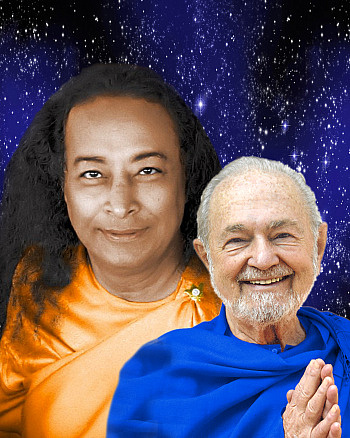 Swami Kriyananda, a direct disciple of Paramhansa Yogananda, founder of Ananda Sangha and author of Ananda Yoga for Higher Awareness, was among several wise teachers dedicated to preserving yoga’s ancient, original goals—including the vital concept of the guru.
Once Kriyananda was asked by a seeker, “But do I really need a guru?” He instantly replied, “No, not at all, you don’t need a guru.” Then after a brief pause, he smiled and added, “Only if you want to find God, will you need a Guru.”
In fact, yogis have always sought exactly that: God and enlightenment. Yoga without samadhi is like music without a melody—beautiful in form but missing its soul.
During an interview, someone asked, “Which do you consider the best of all yoga asanas?” Swami’s reply surprised the inquirer. “The best asana is the one that teaches you to stand squarely on your own two feet.” This, he explained, is the essence of yoga: cultivating complete self-sufficiency, inner wholeness, and even bliss, so that you become truly independent, relying on nothing else.
Do these answers contradict each other? On the surface, it may seem so. A true guru teaches the disciple “to stand on their own feet.” He helps to make the disciple strong and wise, never weak or dependent. His role is to help others experience their own highest Self, where they are truly free and independent.
Discipleship is often completely misunderstood in the West, due to poor examples. In truth, it is a pure manifestation and expression of the law of divine love.
Can the depth of yoga science be truly explored through personal effort alone, or by studying with a regular yoga teacher or institution?—A confident Westerner might say, “Yes.” But the ancient Indian tradition replies with conviction, “No.”
In essence, both components are necessary: sincere self-effort and the higher blessings and grace of a true Master, especially for those who seek the deepest yogic realization. Without such blessings, a student’s results will remain shallow and their progress limited. Yoga then will be a good, and beneficial practice—but not the divine, sacred science it is meant to be. It’s like eating only the crust of a cake and missing out on both the sweet frosting and the tasty, soft crumb inside.
It is good news that some yoga schools continue to maintain the ancient yogic traditions. It must be said, without meaning to offend, that schools that do not emphasize a personal connection with a great yoga master or tradition is offering a less comprehensive, partial path.
One of the most vital keys for success in yoga is love—love for practices, love for a true teacher, and love for the Infinite Divine.
Yoga as a lifestyle
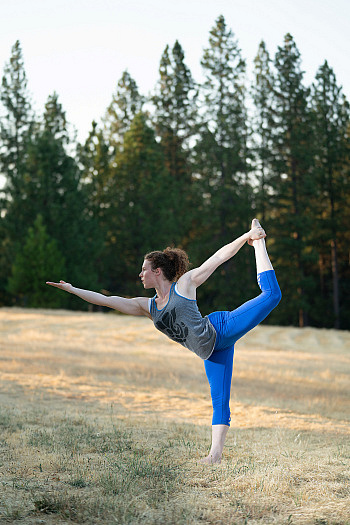 Many people who practice yoga asanas do so primarily to feel better physically and mentally, rather than to seek the deeper spiritual blessings of yoga. This is perfectly understandable and absolutely fine.
Yet it’s important to recognize that such a practice lies far from yoga’s original purpose and ancient roots, as distant as the moon’s faint reflected light compared to the blazing radiance of the sun.
Yoga is not just postures and techniques—but a noble lifestyle with high moral values. In traditional yoga settings, many authentic yoga teachers often would not offer even a single yogic technique until the student had first embraced the foundational yogic principals of daily life, known as the yamas and niyamas. Yoga is a life dedicated to inner transformation, growth, purification, and ultimately, union with the Divine.
Yoga diplomas
Another notable difference between the Western and Eastern approaches to yoga lies in how a yoga school is recognized—especially in terms of teacher certification.
In the West, the prevailing view is that a legitimate yoga school must be registered and accredited by an official independent body. Only with this formal recognition is the school qualified to issue teaching diplomas.
However, the Eastern tradition has for millennia followed a very different path: one that is non-organizational, with no central authority. Their perspective is that true authorization comes when you have been taught, blessed, and authorized by a true teacher.
Yoga and God
Here is another striking thought: It seems that in our Western yoga vocabulary, the word God overall has been eliminated. In popular yoga magazines, it is rarely found. In most yoga studios, the word “God” is avoided and rarely heard —perhaps out of a concern for alienating students or driving the “customers” away?
Yet, in traditional yogic teachings, the entire purpose of the path is union with the Divine. To sideline the sacred is to revision and reshape yoga into something far removed from its original intent.
Once, Ananda Yoga students asked Swami Kriyananda if they could change the affirmations used during the asanas that mentioned God? Kriyananda taught traditional yoga and his response was emphatic and clear: “No. There is already too much yoga around without God.”
Authentic yoga without God is unthinkable
You may call the Divine Ishwara (as Patanjali did), or Brahman, or choose any one of a thousand names across traditions, as you like. God may be embraced as a masculine or feminine concept and as one with form or without form. The important thing is that the practitioner’s consciousness begins to open and expand into a higher realm. Without this impulse and direction, the heart of yoga is lost.
Even though it was written during a relatively dark age in India’s history, the Hatha Yoga Pradipika still conveys timeless, illumined truths; remnants of a far older and deeper tradition. These insights can guide us today, especially if we wish to align our practice with the authentic roots of yoga. Here is how it instructs the practitioner to begin:
In a clean place, establish a comfortable and steady seat
(asan, the traditional cloth for sitting on, now the yoga mat).
Seated there properly, meditate on the Guru and on God.With the grace of the Guru, and for the success of the practice,
one should proceed through asana and then pranayama (prana control)
and further disciplines. (Verses 1.12–1.14)
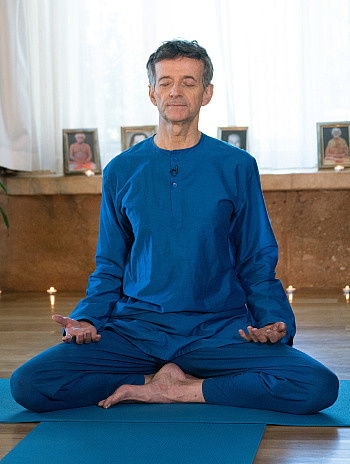 You have now read the opening lines of the Hatha Yoga Pradipika. Its closing words speak volumes about the true purpose of the ancient science of yoga. They turn our attention to the central energy channel—sushumna, the subtle inner spine—an essential pathway to authentic yogic practice.
As long as the life-force (praṇa) has not entered the central channel, as long as the mind has not become steady through control of praṇa and vata (restless energy), as long as a meditation resembling the natural state has not arisen, until then, what people call ‘knowledge’ is nothing but boastful, false talk.
A great yogi once said, “Yoga is like a drum. It will sound just as you play it.” In other words, how we approach and practice yoga is entirely up to us. The hope, however, is that the path of yoga remains true to its essence, at least for those who seek it with sincerity.

8 Comments
Simply magnificent message!! Another precious pearl of wisdom from Jayadev, written in a style that can be understood by all.
Thanks, dear Jayadev, for this thoughtful and inspiring article! May all who read it be inspired to practice Yoga as a means of contacting the Divine within! Aum, Aum, Aum!
Mornings and evenings I watch you in the energization exercises (On YouTube) that we do prior to meditation! Thank you for your article! Uplifting!
Yoga as it aught to be thought. Well said and necessary, especially for today.
Thank you so much for a beautifully written vital piece. Lest we forget, this should be an important discussion with every would be “yoga teacher” in the current state of “western yoga” teacher training.
Uma luz para todos os praticantes que muitas vezes se limitam a praticar exercício físico com auto intitulados professores de ióga, não yoga
Wow ! Any yoga enthusiast must read this article !
Beautifully explained.