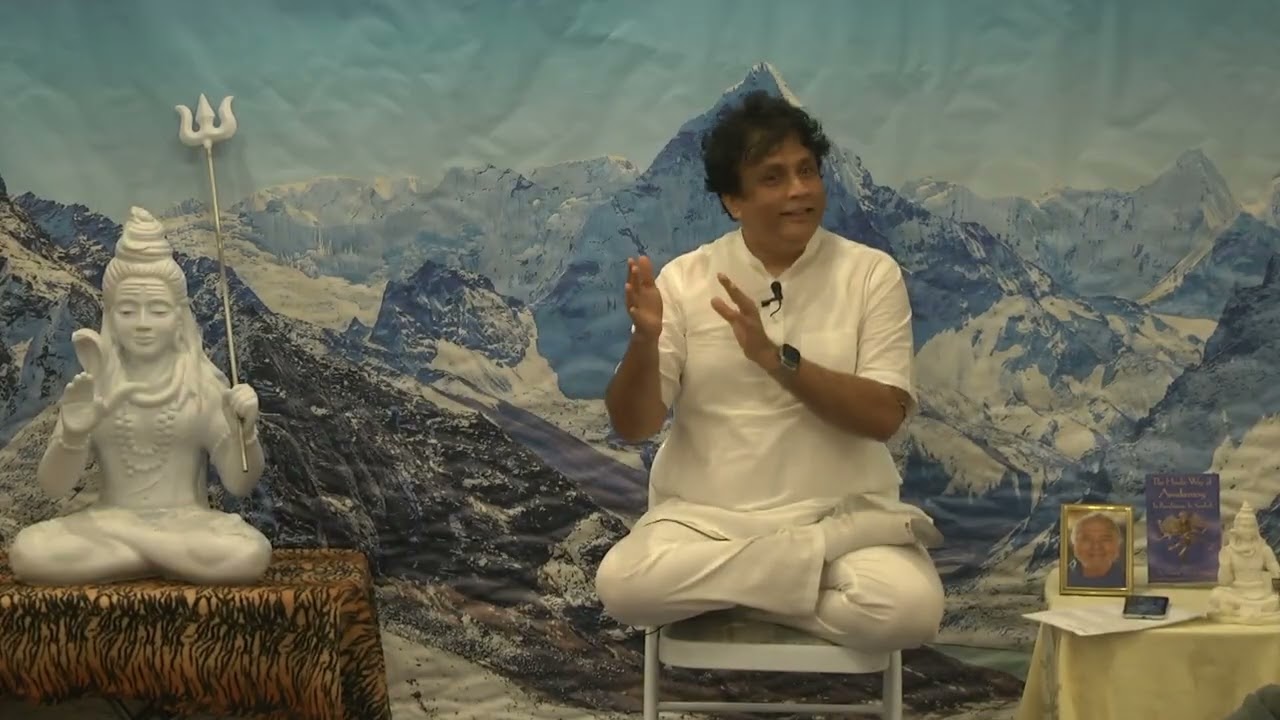
Who Is Shiva? The Inner Meaning of Shivaratri
“Liberation is dependent on inner, rather than outer renunciations. The highest yogic attainments are not barred to the family man.” Babaji, to Lahiri Mahashaya (Autobiography of a Yogi, ch. 34)
Shivaratri is a curious festival. Its full name is “Maha Shivaratri Vrata,” which means “the austerity performed on the great night of Shiva.” On this night, one worships God in the form of Shiva, who is said to be covered in ash, has a great cobra coiled around his neck, his neck is blue because of undigested poison, he wears the Moon as a hair-clip, and from the top of his matted locks comes pouring out in great torrents the purifying stream of the Ganga river.
Shiva is worshipped by staying awake the whole night, chanting his mantra, and observing a strict fast. Outwardly, it’s a curious festival for an even more curious deity. But when we unravel the layers of meaning hidden in the ancient tradition behind this holy night, what emerges is an inspiring practice that is as applicable in daily life as it is on this special night.
The Bhagavad Gita says: What is night for the ordinary man is day for the yogi. Swami Kriyananda interprets this profound stanza to mean that things which are meaningful to material people are not of interest to the yogi. Thus, the “night” is the yogi’s “day”—a time when others are asleep. What does the yogi do in the night? She turns inward, towards the great light of the Spirit; she gives up anything that reminds her of the body (such as food); and she fills her mind with the chant of God. And of what form is the God that the yogi has turned towards? It is beyond time (the moon), beyond death (ash), whose very form embodies wisdom (the Ganga river).
With Murali Venkatrao
