Nurture Enthusiasm
Dive into Awake and Ready by Susan (Usha) Dermond, a revolutionary book that empowers children through energy-based learning. Drawing from her diverse background in education, Usha challenges the notion that "reasonable explanations" are always effective for children's emotional growth. Instead, she explores yogic principles, as taught by Paramhansa Yogananda, and how they can change the flow of energy to foster calmness and focus.
Usha's real-life experiences illustrate the power of these principles in practice, offering valuable insights for parents, teachers, and caregivers. By recognizing that true happiness comes from meaningful engagement, not mere excitement, adults can nurture a child's well-being and create a harmonious environment in homes, classrooms, and workplaces.
If you seek a holistic approach to enhance children's learning, Awake and Ready is a must-read! Empower the next generation with the transformative potential of energy-based learning. Share this video with parents, teachers, and anyone dedicated to nurturing young minds. Let's embrace the power of Awake and Ready together!
#EnergyBasedLearning #AwakeAndReady #SusanDermond #YogicPrinciples #ParamhansaYogananda #Parenting #TeacherResources #HolisticEducation #PositiveGrowth #BookReview #EducationForLife #EmpoweringChildren #MindfulParenting #AlternativeEducation #BookTube #Bookish #BookWorld #BookRecommendations #BookNerds #EducationCommunity
Transcript
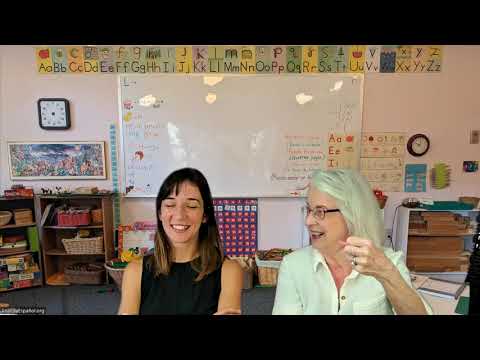
Usha: Welcome to our Channel, “Education for Life”, where we talk about everything related to education and helping young people to learn to meet life's challenges. I'm Usha Dermond, and I am a former teacher, former principal and author of Calm and Compassionate Children and author of Awake and Ready: How to Work with Energy and Motivate Anyone.
Jaya: And I'm Jaya Botaro, and I am the Co-Director of the Living Wisdom School here in Nevada City, California, and I'm part of the Education for Life team.
Usha: You know Jaya, last time we talked about excitement versus real happiness. And this time, we're going to talk about enthusiasm and nurturing enthusiasm. Actually, that is the second chapter of my new book, Awake and Ready.
So, the enthusiasm is a little different from excitement because, quoting Secrets of Winning People by Swami Kriyananda, he says “Enthusiasm is not excitement, it is deep conviction.”
So, when we have that sort of enthusiasm, born of deep conviction, rather than an agitated or overly tense kind of energy, it's something that is not easy to come by, you know? We don't have it all the time, we get it for certain things that we have interest in or love for, and we don't want to cut that off. We want to encourage that sort of energy in others.
So actually, I can give you an example of a time where I did exactly the wrong thing…
Jaya: Sometimes that paints a good picture!
Usha: And maybe it'll call something to mind that you did, too. But this was my… this was when I was living in the Carolinas and my stepson lived with us. And one Saturday morning, I heard him run in the back door screaming my name or, not screaming but yelling, “Susan, Susan!” And so I went around the corner to see what was going on.
And he was holding up this flower, this beautiful drooping flower, with a pink flower and the stem and the roots were hanging down with dirt dangling, you know? And he goes, “Look what I found!” And I went, “Wow!” It was a lady slipper, and this was amazing, because they're not a rare plant but they were very unusual, and the fact that there were some growing on our property that I did not know about was astounding.
So I was like, “Wow, but you're not supposed to pull them up out of the ground, that kills them.” And his face fell, and I just realized, “Oh my gosh, he was trying to please me because he knew I love wildflowers and he himself appreciated beauty and he wanted to share it with me!” He was, he was so excited, he wanted to share his joy, and I just kind of cut him off at the knees, you know?
And I realized later, oh, you know, I could have taught him that when you find a beautiful wildflower or any plant, you don't need to pull it up from the roots to share it, you know? And because there were a lot of them where he found them. So it would have been fine to pick one and bring it to me, but that wasn't the time to give him that lesson.
Jaya: Yeah.
Usha: I don't know if you've ever done anything like that…
Jaya: I have, this year. I was helping with a kindergarten nurse. And we would get together every morning with the teacher and we would go over the work we had for them. So, this day, we were doing…we were starting to get acquainted with numbers. So we were going to do numbers with Play-Doh.
So I had I come to class and I put the Play-Doh out, and they go, “Play?” and I said, “No, we're gonna work.” And even though it was play, because it was making numbers with Play-Doh, that's right, yeah, and when I said, “No, we're gonna work,” they just also like, you know? And then, well, but you know, I tried to fix it, but it was yeah, it came out wrong. So yeah, don't do that.
But I was also thinking, with this idea of ‘don't cut the energy, try to build it’, you know? What are some things we could do? I think, follow-up questions to help them. You know, sometimes, especially kids that have so many ideas all the time, and, what about, “Can we do this?” And you know, sometimes it's really far out.
Or, so maybe ask them follow-up questions, “Oh, do you think we could do that? Do you think? How? What do we need? And then have them come to the realization that maybe it's too hard or we don't have the right tools or you know, whatever it is.
And same with adults. Being in the school office, I do experience enthusiastic parents that have ideas of what we can do or how we can do a thing. And you know it's, they're not always practical, or we've already tried them and they haven't worked but, same thin.,You can't… it's not helpful. I mean, you can, certainly, but it's not helpful if you just cut the energy. But, same thing…follow-up questions or involve them… ”Are you willing?”
Usha: Yeah, redirect the energy, find something that you do need doing, that they'd be good at. Yeah, yeah.
Jaya: Yeah. And sometimes you, you know, it's good, and you let them go with it, and beautiful things come out of it. So just keep an open mind.
Usha: Yeah, this truism that the energy is not… the energy is the most important thing, not the details. The details will take care of themselves if the energy is right. Well, that just sounds kind of almost airy-fairy, doesn't it?
But I was thinking about a famous person that really illustrates that, and that's Jane Goodall. And most all of you know who Jane Goodall is, the researcher who discovered with chimpanzees, by observing them in the wild, she discovered they do make tools and up to that time, it was one of the differences between animals and man, whereas that animals don't make tools. But of course we know many animals do, now, even birds. But she was the first and she discovered their social hierarchy.
But you know, when [Louis] Leakey sent her to Africa to observe chimpanzees and funded her, she had no qualifications whatsoever. She did not have a college degree, but she loved animals and in particular she loved apes and chimpanzees. And of course, the rest is history. I mean, you all know she went…she's changed the world…she has. She's a well-sought after speaker and later on, she was sent back to college. She got a degree and her research really was a model for much mammal research after her.
But what if he had just looked at her… the details, whatever, her qualifications? No, he saw something in her, he saw that she had this potential, this energy, this enthusiasm, what was it called again? ‘Born of deep-born conviction’. And that through that, she attracted what she needed. It was, it's really, it's an amazing thing, but it's true.
And so let's, I think it behooves us all, but people in our lives, when they're really enthusiastic about something, even if we think it's not the best idea, that we, you know, we encourage that, that energy at least. Yes, yeah, yeah.
So, thank you for joining us.
Jaya: Yeah, thank you for joining us. And if you liked this video, you found it helpful, subscribe. Give us a like. And if you have questions, you're always welcome to write down in the comments section. But thank you so much, and remember to stay awake and ready to meet life’s challenges, joys and lessons.
Usha: Thank you. Bye.
