Tune Kids Into Their Inner Calm
November 1, 2023
🧘♂️ Tune Kids Into Their Inner Calm 🌟 Join long-time Education for Life educator Narani Moorhouse as she reveals the power of guided meditations and their impact on children's lives.
🌼 Explore how to motivate children and foster progressive education! Watch as she demonstrates the transformative process in this enlightening video. As Paramhansa Yogananda and Swami Kriyananda have taught, inner calm can empower children to be actively calm and calmly active.
Transcript
Introduction to Visualization with Children
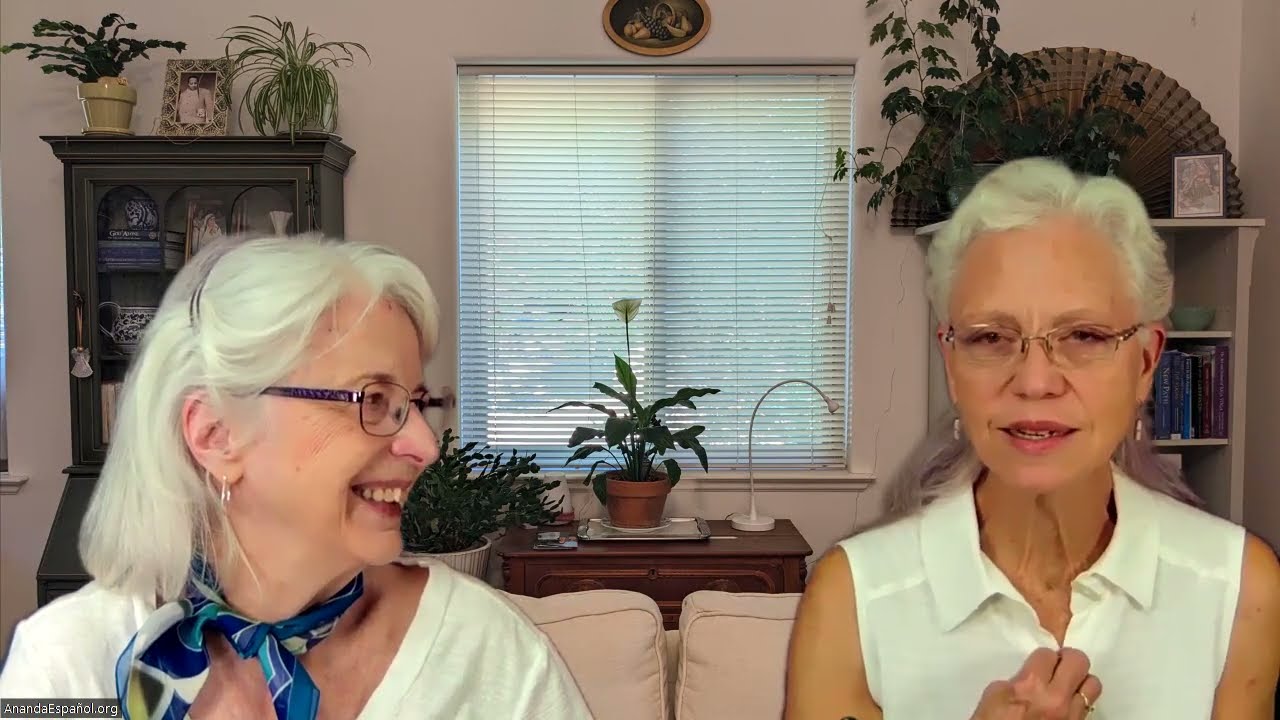
Usha Dermond: Hi, welcome back to the Education for Life channel, where we talk about all things related to teaching children and raising children. As you can see, I have a new guest with me today: Narani Moorhouse. And I invited her on today to talk about stories and visualizations with kids. But she could talk about many things she has been teaching in the Living Wisdom Schools for more decades than we want to talk about.
When I came to teach in the school in 1984 she was there. She helped me a lot and she could talk about so many subjects. But today, let's talk about doing visualizations with children—how they can be calming—and she is going to, I hope, give us an example today. So when do you use them, Narani?
The Power of Visualizations for Calming Children
Narani Moorhouse: Well for visualizations, we, I, do those many times, and usually it's just to bring a sense of calm to the children and to use their imagination to sort of access their more feeling side and sense of upliftment.
Even just last week, I came in from recess, and I was a little later than the children because I was picking up a few things and came in, and there was one of the little girls with one of my instruments, playing (we call it quiet time)—playing quiet time with a couple of the other children. And I thought, “Wow, that's very different than one would expect.” It was lovely. And so that's a big part of the visualizations that I do.
Storytelling as a Tool for Emotional Healing
I use stories a lot to either bring forth in the children's consciousness something new, something that is more expansive, maybe, than what they've done before. Also, I will sometimes do it to address something that's happening in the class.
Or if I have a child who's going through a hard time for one reason or another, I can make a story that, you know, involves somewhat of that situation and works through it and comes to a positive resolution. So that, you know, a story is a child's language; it's the world they live in a lot—that world of imagination—and so by taking them into that and addressing, you know, a situation from that avenue, it's different than just giving them information and talking to them with your head. So that's when I use those a lot.
The Role of Nature in Visualizations
Usha: I know that in the book Education for Life, there are several examples of two or three visualizations that seem like they all have to do with nature, and I know you like to do them with animals. I wonder…are there any other topics or situations that you typically like to place your visualizations of stories in?
Narani: Nature really is an open book for a lot of children. Over the years, sometimes a topic about God or about an inner feeling will come up, or, you know, when they feel most calm, and it's very very common that that's in a time of nature, in an experience with nature, so that really is an open channel for a lot of children. So I do a lot of that. I do animals. I will do, like, little-little children.
If I'm working, say, with third graders or something like that, even sometimes with my younger kids—I'll use babies—it's something that gets, that touches their heart, that opens their heart and where they are maybe either the older one or, you know, that the animal sometimes teaches. But also sometimes they give to the animal.
And so it's just, it's sort of, for me really, it comes from what do I feel like my children are in tune with? And walking through that door with them.
Usha: Yes, well, you know, we recently did a video with Irene Schulman, and she talked about entering the child's world, so it's very closely related there. I think the best way for people to get an idea of what we're talking about is for you to actually demonstrate and do a short visualization with us. Okay? So we can have that feeling ourselves.
Narani: Okay, let's see. Let me think. Well, we were outside a lot today doing an exploring time in nature, and we were on a mountain.
Usha: On a mountain?
Practical Tips for Guiding Visualizations
Narani: Yeah, we climbed up to the top of Badrinath.
Okay, so I would say to them—often I'll have them lie down rather than sit up simply because some children—it helps if they close their eyes because you can imagine things more with your eyes closed. And for some children, they're nervous about closing their eyes because someone else might be looking at them, somebody else might be peeking, you know. And so if they are laying on the ground, laying flat and their eyes are closed, no one's going to see them. And I also have little soft…
Usha: Eye pillows?
Narani: Well, polar… well, polar fleece mask eye covers that they can use, and they sometimes will feel safer closing their eyes that way. It’ll take the attention off of them and from them off of other children. So that's just a little hint.
Usha: Let me just add that Narani taught me that kids don't like to close their eyes sitting up in a circle. And I taught mostly fifth/sixth grade, all the way up to ninth, but I found that so true, that if I let them lie down, they were willing to close their eyes. Or I had to keep my eyes open the whole time and point to anybody who had theirs open. And it's a good thing to remember if you're working with more than one child.
Narani Morehouse: Right, right. And the other thing is there's a tendency for us, as teachers or parents or guides in some way, to also want to close our eyes to set the example, but then you have no idea what's going on. And so if you can keep your eyes open, you can tune in more deeply. If some kids are a little bit restless, you can change what you're doing to, you know, “And now feel your arm,” as if they're floating on the ocean or whatever is going on.
You can sort of put it into what you're doing and address it without having to point, or you certainly don't want to call a name in the middle of a visualization. And so it is important, I think anyway, to keep your eyes open so you can stay more and more in tune with the children through the whole thing. So, okay, but I might close my eyes now because I'm making it up on the spot.
Usha: But I might close mine to get into it.
Demonstration: A Visualization for Calm and Connection
Narani: Okay, you're a grown-up; you can handle it all.
[Playing music]
Imagine that you're sitting at the top of a beautiful mountain. There's a soft breeze blowing, and you feel your hair swaying just a little with that breeze, and the air that you breathe in is so clean and fresh and relaxing. And then you hear a rustling off to the side, and you open your eyes, and you look for what it is, and a tiny little rabbit comes running up and jumps right into your lap.
You can feel through its skin its heart is racing, and it's shaking a little bit, and you know it's scared. And so you place one hand on its chest ever so gently and another hand on its back, and you breathe slowly, and you begin to hum just one or two soft notes, and you can feel the muscles in that little rabbit relax, and its heart is beating slower. And you send it feelings of being cared for and protected—nothing to fear, you are there, you're caring for it.
And before you know it, that little rabbit is fast asleep in your hands, and you hold it and continue to give it your care and your strength until you feel it give a little shake and look at you right in your eyes, and off it hops, happy as can be.
[Music]
And then you can open your eyes.
The Importance of Calm for Teachers and Parents
Usha: Wow, that was beautiful! When you get the kids this calm and centered, what would you do next with them?
Narani: You know, we usually stay quiet for just a little bit. You know, we usually have pillows and things like that, so I'll say, you know, completely silently, “Let's put your pillows back.” And then it depends on what we're doing next, but there's just a gentle transition. I mean, it's school, so we always have something to do, and it just—we usually do this when we come in from recess.
Usha: I see.
Narani: And so it just calms things down, it lifts them up, and we're ready to work or whatever else we're doing.
Usha: Yes, that's beautiful on so many levels, both the calming but also—and I think even primarily—to give the children an experience of giving to something, giving to and expanding their consciousness beyond their limited selves to feel their power that they can give. Yeah, it's beautiful.
Narani: Well, when that came to mind, I thought, “Oh,” because I have someone right now who's a little bit scared of things. And so if you put them in the position of being the one who gives the care and gives that sense of protection, you know, it just—what's the—it's like it empowers them in a way that, where instead of feeling helpless, you know, or that things are too wild going on around them or something, that they have something like that that they have to give. And if they have to give it, it's within them.
Usha: So it's important that the parent or teacher doing this has that calm, too, in order to produce it. And I can imagine people out there who are watching this saying, but what were those beautiful sounds? What was that instrument? I'm not a musician; I can't do that.
Using Music to Enhance Visualization
Narani: So this is actually a zither, and really it's an old, old autoharp that I got at a thrift shop, and I just took the—'cause I knew someone who had a really nice zither—I mean, they had the official thing, but I couldn't afford that, so I took the chord bars off, and then they told me how to tune the strings.
So this is tuned to the key of C. I'm not a musician, so it doesn't matter; you can't play it wrong. You just strum. I mean, my little girl, who was doing it earlier, she just has—this is a little piece of felt—and she was just sitting there. You can do anything you want. So if you can find an old autoharp and you can just tune the strings to that, really, you can't play it wrong.
Closing Thoughts on Visualization and Education
Usha: Lovely! Thank you so much for coming to be with us and sharing that, Narani.
And I hope you got something out of that and can use some of thes ideas, or at least, I know you must have enjoyed that calm, beautiful feeling that Narani helped us to tune into. Oh, thank you!
And remember, until next time, to be awake and ready for all of life's opportunities, challenges, and joys.
______________
✨ Explore more insights in "Awake and Ready" here: 👉 Awake and Ready 📚
#ParamhansaYogananda #SwamiKriyananda #EducationForLife #Education #MotivateChildren #ProgressiveEducation #InnerCalm #GuidedMeditation 🌱
