Dive into the Child's World
November 1, 2023
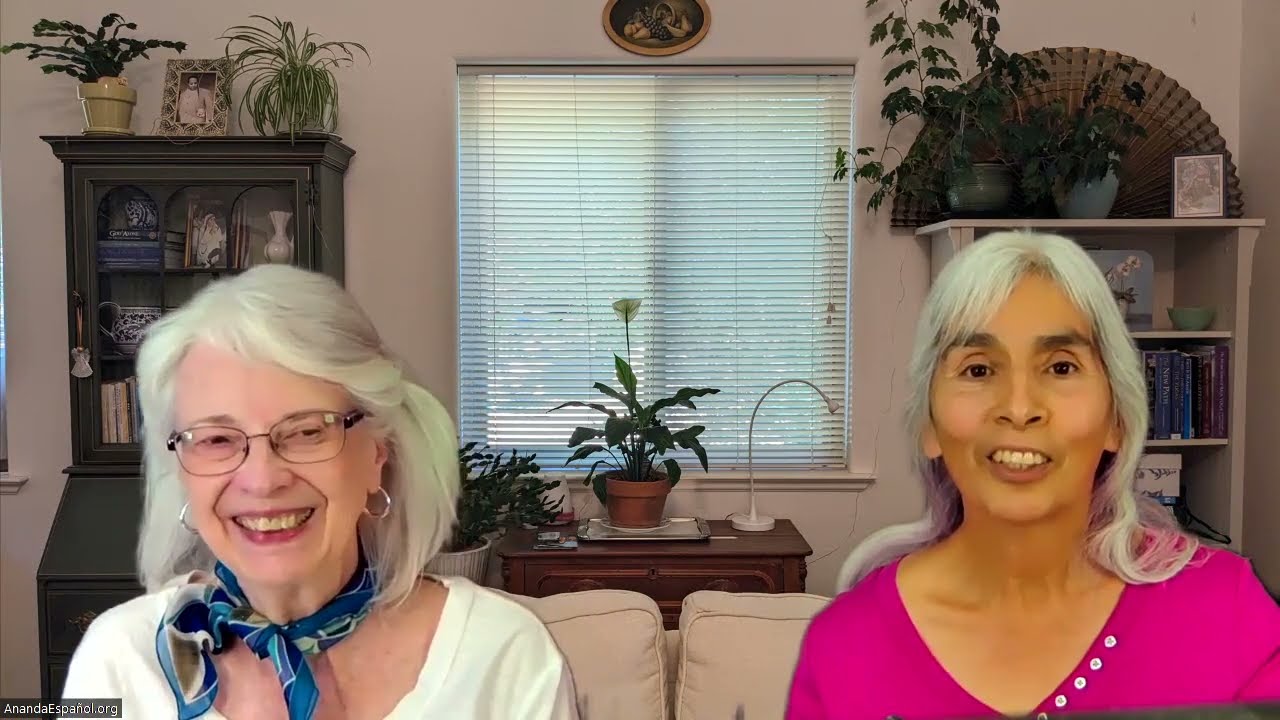
🌟 Dive into the Child's World with Irene Schulman 🌈 Join us for an engaging interview with Irene Schulman, the Education for Life (EFL) Spanish coordinator and a former teacher, as she shares valuable insights on building meaningful connections and having enriching conversations with children.
🗣️ In Chapter 4 of "Awake and Ready," we delve even deeper into the profound impact of connecting with children within the realms of their interests, which significantly enhances their willpower and willingness to learn.
📖 Discover more in "Awake and Ready" here: 👉 Awake and Ready 📚 #EducationForLife
#ChildsWorld #MeaningfulConnections #ConversationsWithChildren #AwakeAndReady #Education #ChildrensInterests #MotivateChildren 🌱📚🧒
Transcript
Introduction: Welcoming Irene Schulman
Usha: Hi everyone. Welcome back to our channel, where we talk about Education for Life [EFL].
As you can see, I have a guest with me today. This is Irene Schulman, who has been a teacher, a longtime teacher, in our Living Wisdom School at Ananda Village in Nevada City, California. Today, she is the head teacher in our Spanish-speaking training program for Education for Life.
Teachers and parents are interested in the system and she also has developed an approach to connecting with children that I really wanted to interview her about today, because I think it's a little different, a little unusual, and she's made it part of her EFL training.
So I think we'd all like to hear more about it. Irene. So what do you mean when you say, “entering the child's world?”
The Concept of Entering the Child's World
Irene: I guess how we could think about it is, you know how kids you know, if we try to think of how a child enters our world? Let's say we're on the phone and a child comes up to us and says, “Come here, come here!” or just starts yanking the phone away from us, and part of that is sort of learned.
And although we don't know this, we haven't really taught them how to enter into our world. So this sort of came about when I was sitting observing a teacher teach, and it was a math teacher and he had kindergartners. And so then what happened was, he went up to the board and he started writing on the board. And then the kids started crawling under, underneath the tables, and he just kept writing on the board.
And afterwards I asked him, “Did you notice that the kids were crawling under the table?” He says, “Yes, but I don't know what to do.” And somebody said to me, who is trained as an educator, that you're trained in the curriculum and everything, but you're not trained how to work with a child. So all of a sudden, I woke up, because I was never trained as an educator, but I always knew how to relate to a child. So I was like, “We need to sort of write this down maybe.”
Usha: Yeah, yeah, so…and she has done that. So I think you've already explained why there's a need for the technique or the approach. So now, will you share with people what your approach is to enter the child's world?
But before you do, I just want to say that's a great example of the lack of engagement. I mean, one thing we've talked about, having to do with ‘awake and ready’, is that children don't learn unless they're engaged, and sometimes we have to wake them up and get them ready.
So this is another kind of example of that but I'll…it's not always for the purpose of, it's not always for the purpose of our… teaching them something. It can just be to relate to them and find out who they are. So will you explain?
Irene: That's the truth. A lot of times when we're teaching, or even as parents, we're sharing something with the child or trying to get them to come eat dinner.
Steps to Connecting with Children
We're not taking these steps to figure out, where are they? Where are they? And I'm starting from where they are. So, so that's the first step in entering a child's world.
First, “Where am I? What, where are my… where are my thoughts? Where are my feelings? How do I feel about this child?
So, sort of clear the slate, then look at them. What are they doing? Then maybe get like, physically a little bit close to them. And what you're looking for is some kind of invitation. You want the child to look at you, to acknowledge you, because pretty much they're in their world and they don't see you.
So what tends to happen is a parent says, “Put your shoes on,” but the child is doing blocks or something. And so anyway, it, the thing to remember is, that you don't always have to do this approach, but you have have to do it at least once.
The child needs to know that you are capable of entering their world. When you entered their world, became visible, suddenly you picked up a block. You didn't say anything, you put it down. He saw you relating to him and anyway, so suddenly that happened.
Once that happens, that's in his memory, you're, you're part of his part of his world. You know how to relate to him. He's more willing to relate to you.
Usha: When you said you have to do it at least once. Did you mean once a day? Surely not once in their whole childhood, more than that.
Irene: Probably. Well, as a teacher, you really just need to do it once. Once you do it once, they just treat you differently… they, you're just… they just like you. They don't know why they like you, but the truth of it is, they can trust you, they can trust you to respect them.
Usha: Yeah, yeah that feeling that you're seen and heard. Everyone needs that, especially children.
Yeah, well, I know that you've been teaching this for quite a while and, in your classes, you emphasize people taking what you've learned and actually using it and coming back and talking about it. So what feedback have you had from adults who have tried this approach?
Real-Life Examples of Engaging Children
Irene: Well, the feedback usually… usually is that, it's just there's some kind of a miracle that happens. It's like… there was this lady who wanted to get her little girl out of bed and get her to school on time. And the little girl just kept imagining things and taking her time. And so the mother decided to come in as some kind of a dragon. She knew the girl liked dragons, so she flew into her room in the morning as dragon. And she went, she greeted the little girl.
After that, the dragon just helped the little girl get ready for school, and the little girl was happy. So, and they connected. And so it's that kind of thing. Like, you think, it's really not going to work, but it does work.
Usha: Do you have any other examples like that?
Irene: Yes, there is one about this man. He had a little daughter, same thing. Well, she was… he wanted to teach her something academic, like about different countries and stuff. And she was maybe six, and she wasn't really eager to do that.
But one time, she was taking a bath and she was splashing in the tub. And he thought, ”Okay I'm going to try to enter her world.” So he went in there and he says, he splashed a little bit just with his hand. And she goes, “It's a storm.” And so then, he traveled with her through the storm on a boat, to all these countries. And he said he taught her about navigating a boat, and it was nice.
Practical Tips for Teachers and Parents
Usha: Yeah, yeah that's that's really beautiful. It doesn't always have to be something for people to say, “Oh, I don't have that kind of imagination, you know? I can't make up a story like that.” I don't want that to prevent you from trying this, it's just it doesn't always have to be that, it can be…
Well, I was thinking about this little girl I tutored in reading. And she'd be dropped off after school, and she's a little tired, you know? And she'd come in and I'd think, I could just see she wasn't… she liked me and she wanted to be there, but she wasn't really ready to learn anything or read anything.
And so I always… I got this habit. I found that she liked apples, so I'd cut up an apple. And we’d just sit there and eat the apple together. It's important that I'm doing what she's… we're doing this together. And we eat the apple together and just chat, and then she was really ready to go. It just made all the difference.
Irene: Yeah, yes and it does also work with teenagers. Had a teacher who had a boy who would fall asleep, you know, come to her class, put his head down and fall asleep. And she just decided to put her head down on his desk. And after a little bit, he opened his eyes and he started laughing, and then they connected. That was it.
Usha: That's really fun. Yeah, yeah. Well, thanks so much for visiting today, Irene, and sharing these real life examples. I really appreciate it and I hope this might be helpful to some of you who are watching, and you can try this at home, too. And remember, ‘til next time, to stay ‘awake and ready’ to meet life's challenges, opportunities and joys.
Irene: Thanks.
