Appreciating Others—Experience, Not Theory!
We learn to think of others by the examples of our parents, teachers, and mentors, but we can also be encouraged in this by school activities. Jaya and Usha highlight the value of experiential learning, such as service trips and classroom activities, to help children understand the joy of helping others. They share examples from their schools: taking students to Mexico to serve in an orphanage and organizing surprise Valentine’s Day gifts, emphasizing that real-life experiences are crucial in teaching children to care for others.
For more information on Education for life, go to http://www.edforlife.org
Explore more insights in "Awake and Ready" here: 👉 Awake and Ready 📚
#ParamhansaYogananda #SwamiKriyananda #EducationForLife #Education #MotivateChildren #ProgressiveEducation #InnerCalm #GuidedMeditation 🌱
Transcript
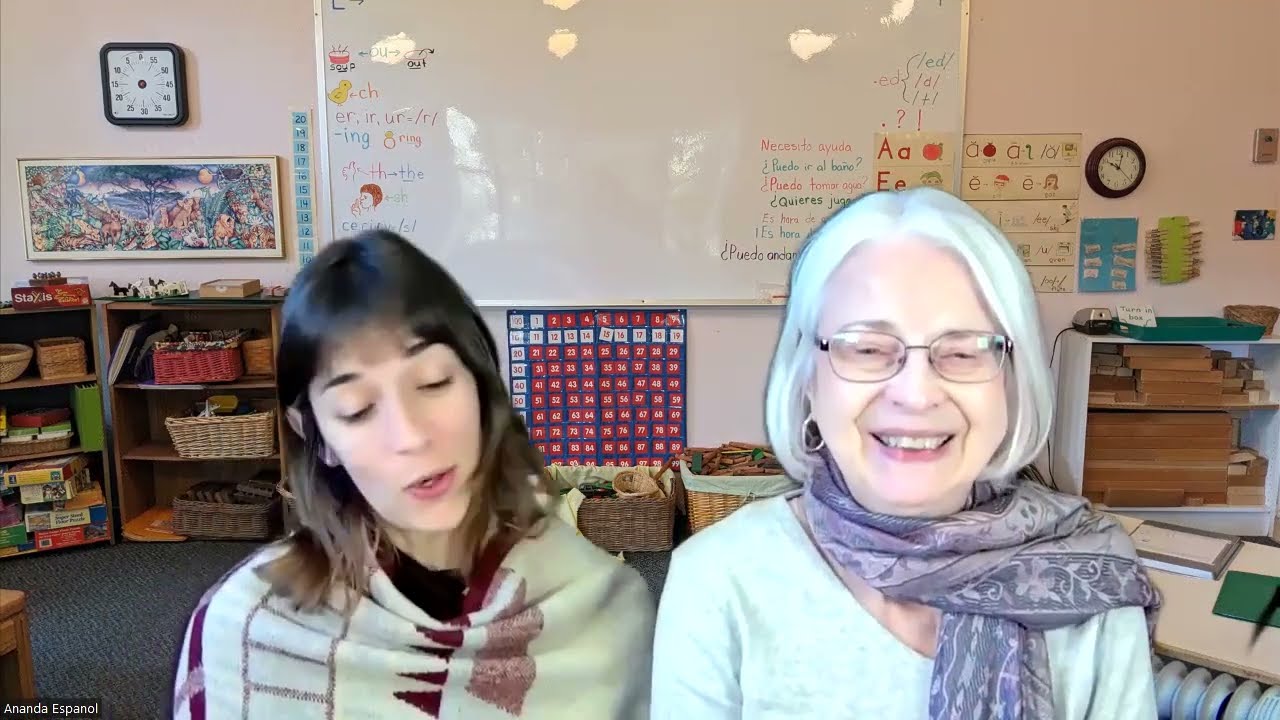
Usha Dermond: Hi, welcome to our channel, where we talk about all things relating to educating children to meet life's challenges. I'm Usha Dermond, and I'm the author of Calm and Compassionate Children.
Jaya Bottaro: And I'm Jaya Bottaro, and I'm the Spanish teacher and current co-director of the Living Wisdom School here in Nevada City, California.
Usha Dermond: And our topic for today is, "Is it all about me?"
Jaya Bottaro: Of course.
Usha Dermond: Of course, right.
The Importance of Teaching Compassion in Education
Well, we know that children, especially little kids, babies, and tots, think it's all about them. But then they grow, they mature, and they become aware of others' realities. Some continue to do that all their lives, and some shut down at a certain point. But we know that selfish people are not as happy as unselfish people. I think if you think about people in your life who are very selfish, you'll see that that's true, and that helping others actually brings us happiness.
In fact, Jaya, did you know they've even done research to show that watching a video of someone helping others, like Mother Teresa, was the one that I read about, actually improved the joy level in people? I don't know how they measured that exactly, but it improved in people just watching the video, or their mood—it's probably a mood thing—improved.
Experiential Learning: Cultivating Empathy Through Service
So at our school, at our Education for Life schools, or in that system which anyone can use, how do we teach children to think about others and to share more?
Jaya Bottaro: Well, like most things, it's through experience and not just lecture. So I was thinking one good example is when I was a Spanish teacher in our junior high and high school, we took the girls to Mexico to serve at an orphanage. We would always do that; we call them service adventure trips to different places, but this particular year we went to Mexico, and it was amazing.
First of all, there was a language barrier. Our girls were in Spanish class, but it was very limited. So seeing them bond with the other girls over, you know, not being able to communicate with words, but finding other ways—sports, playing, or just simply trying. And then the experience of being in a different culture where it was different. We didn't have the comforts of every day, and like the food, we ate a lot of the same things.
We were there for two weeks, and just seeing the girls start to open up and to not only appreciate what they already have but also just appreciate life in a whole different way. And by the time we were leaving, the girls from the orphanage were just hugging and writing them letters. Some of our girls continued to write letters back and forth. But just, yeah, just experience.
Usha Dermond: Yeah, the service adventure trips are a big component for our high school age. I know the one I heard that I thought was really wonderful was they went to a turtle sanctuary, I guess?
Jaya Bottaro: Yeah. Yeah.
Usha Dermond: Yeah, that was really great.
So with the younger children, how do we do that? I know you probably know some schools do food drives, and we've done food drives where you bring in canned food and donate it to the food bank. And that's wonderful, but it's even more effective, or it's even more important, that the children learn to give to those in their immediate environment, to have compassion for those around them.
When someone does something that you don't like and they're in your classroom every day, that takes a little bit—That's a harder way to stretch and grow.
So actually, I wanted to read a quote from Education for Life about that.
"For education to prepare children for meeting life realistically, it should encourage them to learn from life itself. Education should above all be experiential and not merely theoretical." I think we talked about that a little bit in an earlier video. But we can also give kids experiences of sharing.
Incorporating Acts of Kindness in School Curriculum
So an example that comes to my mind is the fifth and sixth-grade teacher I had when I was a principal. She tried this one year, and it was so successful that she started doing it every year.
The fifth and sixth graders would make Valentine's cookies. And, of course, they liked that because they got to eat a Valentine's cookie, but they made a lot of them. While most of them cooked, a few of them would volunteer to write little cards saying, "Happy Valentine's Day from your secret pal," and decorate them. Then, when the cookies got cool, they put them in plastic bags.
When the kindergarten class went out to recess, they'd sneak down to the room and leave them on all the tables. They even got to hide outside the window one time and watch when the kids came back in and how shocked they were. Of course, some of them had to have it read to them, and there were looks of awe and wonder, "Who's my secret pal?"—you know. And they tried to guess who it was, like they guessed the principal of the school or a parent had come in and done it.
Fostering Emotional Growth in Children
Interestingly, the kindergarten teacher said they never guessed the fifth and sixth graders, but the fifth and sixth graders would just swell up and be so pleased that they had done this thing. They had given to someone. They might not have put it that way, but that was what the experience was about. Then, they had to continue to show maturity, not to confess, "We did it," but to keep it a secret, which they did. It was just a marvelous way.
So, giving kids experiences like that is really the way that we primarily try to teach them, as well as dealing with incidents that come up in the classroom. It is harder to forgive and to share with those who have irritated us in some way, even as adults, right?
Jaya Bottaro: Yeah.
Usha Dermond: It's a lesson.
Jaya Bottaro: Yeah.
Well, thank you for watching, and if you have any questions or comments, write in the space below. If you like this video and find it helpful, please give us a thumbs up and subscribe if you haven't already. Thank you, goodbye, and remember to be awake and ready for life's lessons, challenges, and joys.
Usha Dermond: Bye-bye!
Jaya Bottaro: Bye.
