Joy symbol
Ananda Online
What is Ananda? Free Online Inspiration: Streaming Video, Online Books, Online Magazine, Yogananda Learn to Meditate with Lessons in Meditation Support Ananda Books, Music, Video, More Retreats and Classes Near You Ananda Sangha: Spiritual Fellowship and Support
| Listen to Music | Daily Inspiration
Home > Lessons in Meditation > Meditation Support > Learn a Simple Meditation Technique


Meditation Support

"Daily Meditator"
Newsletter

Learn to Meditate

Meditation Study Plan

Cures for
Meditation Problems

Articles on Meditation

Products for Meditation

"Meditation For Starters" Video

Contact Us

gift of inner peace

Watch movie on meditation


Our work is supported entirely by people like you.
Donate online and receive Clarity Magazine free!

Learn to Meditate

A Simple Meditation Technique

Here is a very simple meditation technique you can learn in five minutes.

Sit upright with a straight spine, and relax your body. With your eyes closed, look at the point midway between the eyebrows on your forehead.

Inhale slowly, counting to eight. Hold the breath for the same eight counts while concentrating your attention at the point between the eyebrows. Exhale slowly to the same count of eight. Repeat three to six times.

After inhaling and exhaling completely, wait for the next breath to come in. When it does, mentally say Hong (rhymes with song). Then, as you exhale, mentally say Sau (rhymes with saw). Hong Sau is a mantra (Sanksrit term). It means 'I am He' or 'I am Spirit'.

Make no attempt to control your breathing. Let flow completely naturally. Try to feel that your breath itself is silently making the sounds of Hong and Sau. Initially try to feel the breath at the point where it enters the nostrils.

Be as attentive as possible. If you have difficulty feeling the breath, you can concentrate, for a while, on the breathing process itself, feeling your diaphragm and chest expanding and contracting.

Gradually, as you become calmer, try to feel the breath higher and higher in the nose. Be sure that your gaze is kept steady at the point between the eyebrows throughout your practice. Don't allow your eyes to follow the movement of the breath. If you find that your mind has wandered off, simply bring it back to an awareness of the breath and the mantra.

By concentration on the breath, the breath actually diminishes; its gradual refinement leads naturally to an interiorized meditative state.

Practice this technique as long as you feel to. As a boy, Paramhansa Yogananda used to practice it for hours at a time, until he found himself without breath altogether. He had ascended into soul-consciousness…and a higher reality took over…

Tips to Help Your Meditation

Regarding Your Breath:

  • At no time during the practice of this technique should you make any effort to control the breath. Let it flow naturally. Gradually, you may notice that the pauses between the inhalation and exhalation are becoming longer. Enjoy these pauses, for they are a glimpse of the deep peace attained in advanced meditation. As you grow very calm, you may notice that the breath is becoming so shallow (or the pauses so prolonged), that it hardly seems necessary to breathe at all.

How Long to Meditate:

  • The amount of time you practice is entirely up to you. End your practice of the technique by taking a deep breath, and exhaling three times. Then, keeping your mind focused, and your energy completely internalized, try to feel peace, love and joy within your Self. Sit for at least five minutes enjoying your deeply relaxed state.

Where to Meditate:

  • If possible, set aside an area that is used only to meditate. This will create a meditative mood. A small room or closet is ideal, as long as it can be well ventilated. Your area can be kept very simple. All you really need is a chair or small cushion to sit on.

Meditation Posture:

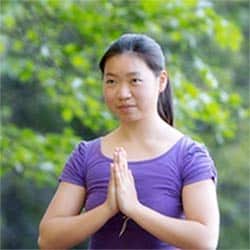
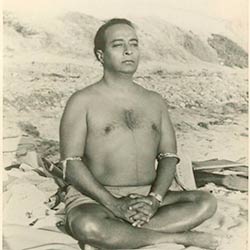
  • There are many ways of sitting that are equally good. You can sit either in a straight-backed chair, or on the floor in any of several poses. Two things, however, are essential: Your spine must be straight, and you must be able to relax completely.

Eyes Position:

  • Focus your attention at the point between the eyebrows. This area, called "the spiritual eye," is a center of great spiritual energy. Your eyes should be closed, held steady, and looking slightly upwards, as if gazing at a point about an arm's length away, level with the top of your head.

Would You Like to Learn More?

Above is an abbreviated version of the Hong-Sau Technique of Concentration described in full detail in the Ananda Course in Self-Realization.

This technique uses the Hong-Sau mantra, and has been practiced by students of yoga for millennia. Hong-Sau and other techniques in the Ananda Course have a scientifically proven effect on the brain and body, as well as the spiritual development of the aspirant.

Additional Instruction

Follow the links below to learn more about meditation:

 • The Art and Science of Meditation
 • The Hong-Sau Technique of Concentration

 • The Ananda Course in Self-Realization, an in-depth comprehensive study of Raja (Royal) Yoga.


gift of inner peace
Watch "The Gift of Inner Peace" movie and experience the joys and benefits of meditation. This beautiful movie has inspired thousands to meditate. (Five minutes of serenity!)


gift of inner peace
Watch "Meditation for Starters,"  a 25-minute video on meditation by Swami Kriyananda. In his powerful talk, Kriyananda clarifies the practice of meditation, and offers advise for beginners and experienced meditators.


Joy to You!
The Expanding Light Retreat Crystal Clarity Publishers

Sign Up
to be on Ananda's email list to receive the latest news from Ananda


Ananda
14618 Tyler-Foote Rd.
Nevada City, CA 95959
sanghainfo@ananda.org
1 (530) 478-7560
©2008 Ananda